









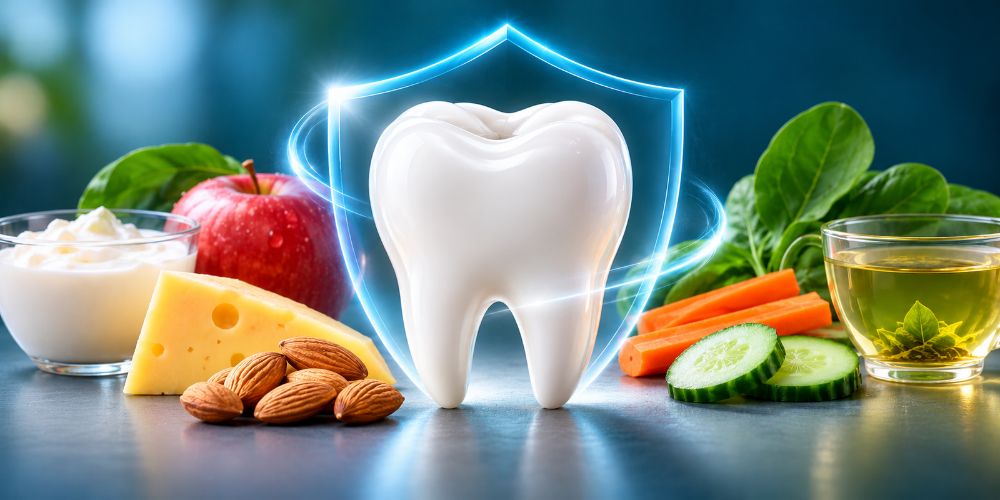
Which Foods Naturally Protect Your Teeth from Bacteria?
Maintaining healthy teeth is not just about brushing twice a day and visiting your dentist regularly. Your daily food choices also play an important role in protecting your teeth from harmful bacteria, reducing plaque formation, and maintaining healthy gums.
Certain foods naturally support oral health by stimulating saliva production, providing essential minerals, and helping maintain a balanced environment inside your mouth. From crunchy apples and leafy green vegetables to calcium-rich dairy products, adding the right foods to your diet can help strengthen your teeth and support better oral hygiene.
However, no food can completely eliminate harmful oral bacteria or replace proper brushing, flossing, and professional dental care.
In this blog, we will explore which foods naturally protect your teeth from bacteria, how they support oral health, and what dietary habits you should follow to maintain a healthy smile.
Which Foods Naturally Protect Your Teeth from Bacteria?
Your mouth naturally contains different types of bacteria. Some are harmless, while others can contribute to plaque buildup, tooth decay, bad breath, and gum problems. When you regularly consume sugary foods and drinks, harmful bacteria use these sugars to produce acids that attack tooth enamel.
The good news is that a balanced diet can help support your mouth’s natural defence system. Foods rich in calcium, phosphorus, fibre, vitamins, and water can contribute to stronger teeth and healthier gums.
Let’s look at the best foods to include in your daily diet.
1. Cheese: Supports Strong Teeth and Healthy Enamel
Cheese is one of the most beneficial dairy products for dental health. It contains calcium and phosphorus, two important minerals that help maintain strong teeth.
Eating cheese may also help stimulate saliva production. Saliva helps neutralise acids in the mouth, wash away food particles, and support the natural remineralisation of tooth enamel.
Dental Benefits of Cheese:
- Provides calcium and phosphorus for stronger teeth.
- Stimulates saliva production.
- Helps reduce the impact of acid attacks.
- Makes a healthier snack alternative to sugary foods.
Tip: Choose plain cheese without added sugar and enjoy it as part of a balanced diet.
2. Apples: Help Stimulate Saliva Production
Apples are often called nature’s toothbrush because their crunchy texture encourages chewing. Although they cannot replace brushing, eating fresh apples can stimulate saliva production and help loosen some food particles from tooth surfaces.
Apples also contain fibre and water, making them a better snack choice than many sticky, sugary alternatives.
Dental Benefits of Apples:
- Encourage saliva production through chewing.
- Provide dietary fibre.
- Help stimulate natural cleaning action in the mouth.
- Offer a nutritious alternative to processed sweets.
Tip: Eat whole apples rather than frequently drinking apple juice. Whole fruit provides fibre and generally requires more chewing.
3. Leafy Green Vegetables: Provide Essential Minerals
Vegetables such as spinach, broccoli, kale, and fenugreek are valuable additions to a tooth-friendly diet. They provide vitamins, minerals, and fibre that support overall oral health.
Some leafy vegetables also contain calcium, which contributes to maintaining strong teeth. Their fibrous texture encourages chewing and saliva production.
Dental Benefits of Leafy Green Vegetables:
- Supply essential nutrients, including calcium.
- Support healthy gum tissues.
- Provide fibre for a balanced diet.
- Encourage chewing and saliva flow.
Tip: Include green vegetables in your lunch and dinner through salads, cooked vegetables, or homemade soups.
4. Plain Yoghurt: Supports Oral Health with Calcium
Plain yoghurt is another excellent food choice for maintaining healthy teeth. It contains calcium, phosphorus, and protein, which contribute to tooth and bone health.
Some yoghurt products also contain live bacterial cultures. However, their specific effects on preventing cavities and controlling harmful oral bacteria are still being studied. They should not be considered a replacement for dental hygiene.
Dental Benefits of Plain Yoghurt:
- Provides calcium for stronger teeth.
- Contains phosphorus that supports enamel health.
- Supplies protein and other essential nutrients.
- May support a balanced oral environment.
Tip: Choose unsweetened yoghurt instead of flavoured varieties that may contain added sugar.
5. Carrots: Encourage Natural Cleaning Through Chewing
Carrots are crunchy, fibre-rich vegetables that can be beneficial for your oral health. Chewing raw carrots stimulates saliva production, which helps wash away food particles and neutralise acids.
They also provide vitamin A, which supports the health of the body’s tissues, including the oral tissues.
Dental Benefits of Carrots:
- Encourage saliva production.
- Provide dietary fibre.
- Supply vitamin A.
- Make a nutritious alternative to sugary snacks.
Tip: Enjoy fresh carrot sticks as a mid-morning or evening snack.
6. Almonds and Nuts: Provide Tooth-Friendly Nutrients
Almonds, walnuts, and other unsweetened nuts contain nutrients that support overall health. Almonds are particularly useful because they provide calcium, protein, and healthy fats.
Unlike sticky sweets, plain nuts generally contain little or no added sugar. They can also help replace less nutritious snacks.
Dental Benefits of Almonds and Nuts:
- Almonds provide calcium and protein.
- Contain nutrients that support healthy teeth.
- Offer a low-sugar snack option.
- Help reduce frequent consumption of sugary snacks.
Tip: Choose plain, unsalted nuts. Avoid extremely hard nuts if you have weak teeth, dental sensitivity, or existing dental restorations.
7. Drinking Water: Helps Wash Away Food Particles
Water is one of the simplest and most important choices for maintaining good oral hygiene. Drinking water helps wash away food debris, dilute acids, and maintain moisture in the mouth.
Fluoridated drinking water can provide additional protection by helping strengthen tooth enamel and reduce the risk of cavities.
Dental Benefits of Drinking Water:
- Helps rinse away food particles.
- Supports saliva production by preventing dehydration.
- Helps dilute acids in the mouth.
- Fluoridated water helps protect against tooth decay.
Tip: Drink plain water throughout the day, particularly after meals and snacks.
8. Celery and Cucumber: Water-Rich Vegetables for Oral Health
Celery and cucumber are water-rich vegetables that can be included in a healthy diet. Their crunchy texture encourages chewing, while their water content makes them refreshing snack options.
Chewing these vegetables stimulates saliva, which helps maintain a cleaner and more comfortable oral environment.
Dental Benefits of Celery and Cucumber:
- Encourage saliva production.
- Provide hydration and fibre.
- Offer alternatives to sugary snacks.
- Support overall nutritional health.
Tip: Enjoy fresh cucumber slices and celery sticks between meals.
9. Green Tea: A Source of Natural Antioxidants
Unsweetened green tea contains natural compounds called polyphenols. Some laboratory and clinical research suggests that these compounds may influence oral bacteria and plaque formation.
However, green tea should not be treated as a proven cure for bacterial infections or gum disease. Its benefits depend on individual oral health habits and overall dietary choices.
Potential Dental Benefits of Green Tea:
- Contains antioxidant compounds.
- May help support a healthier oral environment.
- Provides a low-sugar alternative to sweetened beverages.
Tip: Choose unsweetened green tea. Avoid adding sugar or honey regularly, as frequent sugar exposure can increase the risk of tooth decay.
10. Sugar-Free Chewing Gum: Encourages Saliva Flow
Sugar-free chewing gum, particularly gum containing xylitol, can be a useful addition to an oral hygiene routine. Chewing increases saliva production, which helps neutralise acids and clear food particles.
Some studies suggest that xylitol may help reduce the activity of certain cavity-associated bacteria. However, results vary, and chewing gum cannot replace regular oral hygiene.
Dental Benefits of Sugar-Free Chewing Gum:
- Stimulates saliva production.
- Helps neutralise acids.
- May help reduce cavity risk when used appropriately.
- Provides an alternative to sugary chewing gum.
Tip: Choose sugar-free gum and chew it for a short period after meals if appropriate for your dental health.
Foods and Drinks You Should Limit to Protect Your Teeth
While including nutritious foods is important, limiting certain foods and drinks is equally necessary.
| Food or Drink | Possible Effect on Teeth |
|---|---|
| Candies and chocolates with added sugar | Feed cavity-causing bacteria |
| Soft drinks | Expose teeth to sugar and acids |
| Packaged fruit juices | May contain concentrated sugars and acids |
| Sticky sweets | Remain on tooth surfaces for longer |
| Sugary biscuits and cakes | Increase exposure to fermentable carbohydrates |
| Energy drinks | Can contribute to enamel erosion due to acidity |
Important: Even natural sugars in honey, fruit juice, and dried fruits can contribute to tooth decay. Frequency of exposure matters, so avoid repeatedly snacking or sipping sweet drinks throughout the day.
How Does Food Help Protect Your Teeth from Harmful Bacteria?
Your mouth has a natural defence system that includes saliva, healthy oral tissues, and beneficial microorganisms. The food you eat can influence how effectively this system works.
Here are three important ways a balanced diet supports oral health:
1. Supports Saliva Production
Saliva helps remove food particles, neutralise acids, and protect tooth enamel. Crunchy vegetables and adequate water intake can support normal saliva flow.
2. Provides Minerals for Stronger Enamel
Calcium and phosphorus are important for maintaining tooth structure. Dairy products, leafy vegetables, nuts, and other nutrient-rich foods can contribute to your daily mineral intake.
3. Reduces Frequent Sugar Exposure
When harmful bacteria break down sugars, they produce acids that can weaken enamel. Choosing nutritious, low-added-sugar snacks helps reduce repeated acid attacks.
A Simple Daily Diet Plan for Healthier Teeth
You do not need an expensive diet to support your dental health. A balanced daily eating routine can include simple, locally available foods.
| Meal | Tooth-Friendly Food Choices |
|---|---|
| Breakfast | Plain yoghurt, whole fruit, and eggs |
| Mid-morning snack | Apple or carrot sticks |
| Lunch | Roti, dal, green vegetables, and plain curd |
| Evening snack | Almonds or other plain nuts |
| Dinner | Vegetables, paneer, dal, and whole grains |
| Throughout the day | Plain drinking water |
This is a general example, not an individualised nutritional prescription. Your dietary requirements may vary depending on your age, health, and nutritional needs.
Why Are Good Oral Hygiene Habits Still Important?
Eating healthy foods can support your dental health, but diet alone cannot prevent every dental problem. Harmful bacteria can continue to accumulate in dental plaque, particularly around the gumline and between teeth.
To maintain good oral hygiene, follow these essential habits:
- Brush your teeth twice daily using fluoride toothpaste.
- Clean between your teeth daily using dental floss or an appropriate interdental cleaner.
- Limit sugary snacks and beverages.
- Drink sufficient plain water.
- Avoid tobacco products.
- Visit a dentist regularly for professional assessment.
- Do not ignore bleeding gums, persistent bad breath, tooth pain, or sensitivity.
If you notice signs of tooth decay or gum problems, consult a qualified dental professional for an appropriate examination.
When Should You Visit a Dentist in Delhi?
Dietary changes can support oral health, but they cannot treat existing cavities, advanced gum disease, or dental infections.
You should consider a dental consultation if you experience:
- Persistent toothache or sensitivity.
- Bleeding or swollen gums.
- Continuous bad breath.
- Visible plaque or tartar buildup.
- White, brown, or black spots on your teeth.
- Pain while chewing.
- Loose teeth or gum recession.
Seeking professional advice at the right time can help identify dental problems early and prevent them from becoming more complicated.
If you are looking for a Dentist in Delhi, choosing a qualified dental professional for regular check-ups and personalised oral hygiene advice is an important step towards maintaining healthy teeth.
A reliable Dental Clinic in Delhi can help assess your oral health, identify potential problems, and recommend suitable preventive or restorative care based on your individual needs.
Conclusion
Protecting your teeth from harmful bacteria starts with everyday choices. Foods such as cheese, plain yoghurt, apples, carrots, leafy green vegetables, almonds, and other nutrient-rich options can support stronger teeth and healthier gums.
Drinking enough water, limiting sugary foods, and maintaining proper oral hygiene are equally important for preventing tooth decay and supporting long-term dental health.
Remember, healthy eating is an important part of dental care, but it works best alongside regular brushing, flossing, and professional dental check-ups.
Dentem Clinic encourages people to make informed dietary choices and prioritise preventive dental care for a healthier smile.
Frequently Asked Questions (FAQs)
1. Which Foods Naturally Help Protect Teeth from Bacteria?
Cheese, plain yoghurt, apples, carrots, leafy green vegetables, almonds, and other nutrient-rich foods can support oral health. They provide essential minerals, stimulate saliva production, or help replace sugary snacks.
2. Does Eating Apples Kill Bacteria in the Mouth?
No. Apples do not kill oral bacteria. However, their crunchy texture stimulates saliva production and may help loosen food particles from teeth. They should not replace brushing and flossing.
3. Is Milk Good for Your Teeth?
Yes. Milk contains calcium and phosphorus, which help maintain strong teeth. Choose plain milk without added sugar as part of a balanced diet.
4. Can Yoghurt Help Reduce Harmful Oral Bacteria?
Plain yoghurt contains nutrients that support dental health, and some varieties contain live bacterial cultures. However, evidence about their ability to prevent cavities or control harmful oral bacteria remains limited.
5. Does Drinking Water Help Prevent Cavities?
Yes. Water helps wash away food particles and dilute acids. Fluoridated water also helps strengthen enamel and reduce the risk of tooth decay.
6. Which Foods Should I Avoid for Healthier Teeth?
Limit sugary candies, sticky sweets, soft drinks, sweetened juices, and frequent consumption of biscuits and cakes. Acidic drinks can also contribute to enamel erosion.
7. How Often Should I Visit a Dentist?
The frequency of dental visits depends on your oral health, dental history, and individual risk factors. Your dentist can recommend an appropriate check-up schedule.
8. Can Food Alone Prevent Tooth Decay?
No. A healthy diet supports oral health, but it cannot replace fluoride toothpaste, twice-daily brushing, daily interdental cleaning, and professional dental care.