









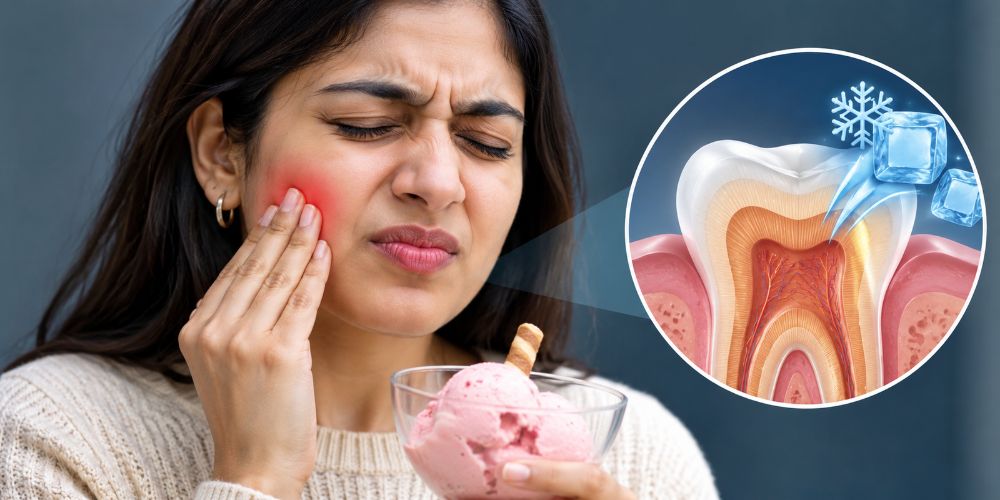
Why Do Your Teeth Hurt When You Eat Something Cold?
When you take a bite of ice cream, sip chilled water, or enjoy a cold drink, do you suddenly experience a sharp, uncomfortable sensation in your teeth? If yes, you may be experiencing tooth sensitivity, also known as dentin hypersensitivity.
Tooth pain triggered by cold foods and beverages is a common dental concern. While occasional sensitivity may seem harmless, frequent or severe discomfort can indicate an underlying dental problem that needs professional attention.
Understanding why your teeth hurt when you eat something cold can help you identify the possible cause, prevent further discomfort, and seek timely dental care.
At Dentem Clinic, we believe that understanding your dental health is the first step towards maintaining a healthy smile. Consulting an experienced Dentist in Delhi can help identify the reason behind tooth sensitivity and determine the most appropriate treatment.
In this blog, we will explore the common causes of cold-sensitive teeth, available treatment options, preventive measures, and when you should visit a dental professional.
Table of Contents
- What Is Tooth Sensitivity?
- Why Do Your Teeth Hurt When You Eat Something Cold?
- Symptoms You Should Not Ignore
- How Is Tooth Sensitivity Diagnosed?
- How Can Tooth Sensitivity Be Treated?
- 7 Effective Ways to Prevent Tooth Sensitivity
- When Should You Visit a Dentist?
- Why Choose Dentem Clinic for Dental Care?
- Frequently Asked Questions (FAQs)
- Final Thoughts
What Is Tooth Sensitivity?
Tooth sensitivity is a condition in which your teeth react with sudden pain or discomfort when exposed to certain triggers, such as:
- Cold foods and beverages
- Hot tea or coffee
- Sweet or acidic foods
- Cold air
- Brushing or flossing
The discomfort may feel like a sharp, sudden sensation that disappears quickly after the trigger is removed. However, some people experience prolonged or recurring pain.
Your teeth have an outer protective layer called enamel. Beneath it lies dentin, which contains microscopic tubules connected to the inner part of the tooth. When enamel wears down or gums recede, dentin can become exposed.
Cold temperatures can stimulate the exposed dentin, causing discomfort.
Read More:- Healthy Teeth and Gums: 4 Tips for a Brighter Smile
Why Do Your Teeth Hurt When You Eat Something Cold?
There are several reasons why your teeth may hurt when eating ice cream, drinking cold water, or consuming chilled beverages.
1. Worn-Out Tooth Enamel
Enamel is the hardest substance in the human body and protects the inner layers of your teeth. However, it can gradually wear away due to aggressive brushing, acidic foods, frequent consumption of carbonated drinks, or teeth grinding.
When enamel becomes thin, the sensitive dentin underneath may become exposed. As a result, cold substances can trigger sudden tooth pain.
What can help?
- Use a soft-bristled toothbrush.
- Avoid brushing too aggressively.
- Limit acidic food and drink consumption.
- Use fluoride toothpaste recommended by your dentist.
2. Gum Recession
Gum recession occurs when the gum tissue gradually pulls away from the teeth, exposing the roots.
Unlike the crown of your tooth, the root surface does not have a protective enamel covering. This makes exposed roots more vulnerable to cold temperatures.
Common causes of gum recession include:
- Brushing too hard
- Gum disease
- Poor oral hygiene
- Tobacco use
- Naturally thin gum tissue
If you notice that your teeth look longer than before or experience sensitivity near the gumline, consult a dental professional.
3. Tooth Decay or Cavities
Tooth decay is another common reason for sensitivity to cold foods and drinks.
When bacteria in dental plaque produce acids, they gradually damage the enamel. As decay progresses, it can reach the dentin and eventually affect the tooth’s pulp, where nerves and blood vessels are located.
You may experience:
- Sharp pain when drinking cold water
- Sensitivity to sweets
- Pain while chewing
- Visible holes or dark spots
- Persistent tooth discomfort
Early diagnosis can help prevent further damage. Visiting a reliable Dental Clinic in Delhi can help detect cavities and determine whether you need a filling or another dental procedure.
4. Cracked or Damaged Teeth
A cracked tooth may cause discomfort when exposed to cold temperatures or pressure while chewing.
Sometimes, cracks are too small to be visible without a dental examination. You may notice pain when biting down or when releasing pressure after chewing.
Possible causes include:
- Biting hard foods
- Accidental injuries
- Teeth grinding
- Previous dental restorations
- Sudden changes in temperature
A dentist can examine the affected tooth and recommend suitable treatment depending on the location and severity of the crack.
5. Recent Dental Treatments
It is possible to experience temporary sensitivity after certain dental procedures, including:
- Teeth cleaning
- Dental fillings
- Teeth whitening
- Crown placement
- Other restorative treatments
This sensitivity generally improves with time, although the duration varies depending on the procedure and individual dental condition.
If the discomfort becomes severe, worsens, or does not improve, contact your dentist for an evaluation.
6. Teeth Grinding (Bruxism)
Do you unconsciously clench or grind your teeth, especially while sleeping?
Teeth grinding, also known as bruxism, can gradually wear down enamel and increase the risk of cracks. Once the protective enamel becomes damaged, your teeth may become more sensitive to cold foods and beverages.
Other warning signs include jaw pain, morning headaches, flattened teeth, and facial discomfort.
A dentist may recommend a custom night guard to protect your teeth from further damage.
7. Sinus Problems
Sometimes, pain in the upper back teeth may be related to sinus inflammation rather than a dental problem.
The roots of the upper back teeth are located close to the maxillary sinuses. When these sinuses become inflamed or congested, pressure may create discomfort that feels like toothache.
However, pain specifically triggered by cold foods should not automatically be attributed to sinus problems. A dental examination can help rule out tooth-related causes.
Symptoms You Should Not Ignore
Not all tooth sensitivity is the same. Paying attention to the type, duration, and intensity of pain can help you understand when a dental examination is necessary.
Look out for these warning signs:
- Brief sensitivity: A sharp sensation that disappears immediately after drinking something cold.
- Lingering pain: Discomfort that continues even after the cold food or drink is removed.
- Pain while chewing: Discomfort when biting or applying pressure to a particular tooth.
- Sensitivity in one tooth: Sudden pain isolated to a single tooth, which may indicate decay or a crack.
- Gum-related discomfort: Sensitivity accompanied by bleeding, swelling, or receding gums.
If the pain is persistent, worsening, or accompanied by swelling, do not delay a dental evaluation. Facial swelling with fever or difficulty swallowing or breathing requires urgent medical attention.
How Is Tooth Sensitivity Diagnosed?
A proper dental examination is important because tooth sensitivity can have several underlying causes. Treating the discomfort without identifying its source may not solve the problem.
At a dental clinic, the dentist may recommend the following steps:
1. Dental History and Symptom Assessment
Your dentist may ask:
- When did the sensitivity begin?
- Does it happen with cold, hot, or sweet foods?
- Does the pain disappear quickly or continue?
- Is one tooth affected or several teeth?
- Have you recently undergone dental treatment?
These questions help narrow down the possible cause.
2. Clinical Examination
The dentist examines your teeth and gums to identify enamel erosion, cavities, cracks, gum recession, damaged fillings, or signs of gum disease.
3. Sensitivity Testing
Depending on your symptoms, the dentist may use controlled air, temperature, or gentle pressure to identify the affected tooth and understand how it responds.
4. Dental X-Rays
If tooth decay, infection, or damage beneath the visible tooth surface is suspected, dental X-rays may be recommended.
The need for imaging depends on the clinical findings and individual condition.
How Can Tooth Sensitivity Be Treated?
Treatment depends on the underlying cause, the severity of sensitivity, and the condition of the affected tooth.
A dentist may recommend one or more of the following treatments.
1. Desensitising Toothpaste
Desensitising toothpaste contains ingredients such as potassium nitrate or stannous fluoride that help reduce sensitivity.
Regular use as directed may gradually decrease discomfort.
2. Fluoride Treatment
Professional fluoride application can help strengthen tooth enamel and reduce sensitivity.
Your dentist may recommend fluoride varnish or other suitable fluoride products depending on your dental condition.
3. Dental Bonding
If sensitivity occurs because of exposed tooth roots or minor tooth damage, dental bonding may help cover the exposed area.
A tooth-coloured restorative material is applied to protect the sensitive surface.
4. Dental Fillings
If tooth decay is responsible for sensitivity, the dentist may remove the decayed portion and restore the tooth with an appropriate filling material.
Treating cavities early can help prevent further damage.
5. Gum Treatment
If gum disease or gum recession is responsible for exposed roots, periodontal treatment may be necessary.
Depending on the condition, treatment can include professional cleaning, gum disease management, or gum grafting in selected cases.
6. Root Canal Treatment
If tooth sensitivity is associated with irreversible inflammation or infection of the dental pulp, root canal treatment may be recommended after proper diagnosis.
This procedure involves removing the affected pulp tissue, cleaning the root canal system, and sealing it to preserve the remaining tooth structure.
Important: Not every sensitive tooth requires a root canal. The treatment should always be based on a proper clinical diagnosis.
Read More:- When Do Your Teeth Stop Growing? A Dentist Explains
7 Effective Ways to Prevent Tooth Sensitivity
Although some causes of sensitivity require professional treatment, following good oral hygiene habits can help protect your teeth.
1. Use a soft-bristled toothbrush
Choose a soft-bristled toothbrush and brush gently using small circular movements. Avoid applying excessive pressure.
2. Choose suitable toothpaste
Consider using fluoride toothpaste formulated for sensitive teeth. Follow your dentist’s advice regarding the right product.
3. Reduce acidic foods and beverages
Frequent consumption of citrus fruits, carbonated drinks, and acidic foods can contribute to enamel erosion. Limit their intake.
4. Avoid brushing immediately after acidic foods
Wait approximately 30 to 60 minutes after consuming acidic foods or beverages before brushing. This allows saliva to help neutralise acids and supports enamel protection.
5. Wear a night guard if recommended
If you grind your teeth while sleeping, a dentist may recommend a custom-fitted night guard to reduce tooth wear.
6. Maintain regular dental check-ups
Routine dental examinations can help identify early signs of cavities, gum disease, and enamel erosion.
7. Avoid extremely cold foods if they trigger pain
If cold foods cause discomfort, temporarily avoid them until the underlying cause has been identified and managed.
When Should You Visit a Dentist?
Occasional sensitivity may improve with appropriate oral care, but recurring discomfort should not be ignored.
You should schedule a dental consultation if:
- Your teeth hurt every time you drink cold water.
- Sensitivity continues for several days.
- You experience pain in a specific tooth.
- You notice visible cavities or cracks.
- Your gums bleed, swell, or recede.
- Tooth pain interferes with eating or sleeping.
If you are experiencing these symptoms, consulting a qualified Dentist in Delhi can help identify the underlying dental issue and guide appropriate treatment.
Why Choose Dentem Clinic for Dental Care?
When tooth sensitivity starts affecting your everyday activities, getting the right dental advice is important. Identifying the cause early can help prevent minor dental concerns from becoming more complicated.
At Dentem Clinic, the focus is on understanding individual dental concerns and recommending treatment based on clinical evaluation.
Whether you are experiencing sensitivity to cold drinks, discomfort while chewing, gum problems, or suspected tooth decay, a dental examination can help determine the next steps.
If you are searching for a trusted Dental Clinic in Delhi, prioritise a clinic that follows appropriate diagnostic procedures, explains available treatment options, and puts patient care first.
Your oral health deserves attention, even when the discomfort seems minor.
Frequently Asked Questions (FAQs)
1. Why do my teeth hurt when I eat ice cream?
Your teeth may hurt when eating ice cream because of exposed dentin, worn enamel, gum recession, cavities, or cracked teeth. Cold temperatures can stimulate sensitive areas and cause sudden discomfort.
2. Is tooth sensitivity to cold a sign of a cavity?
Yes, tooth sensitivity can be an early sign of tooth decay. However, it can also result from enamel erosion, gum recession, or exposed tooth roots. A dental examination is necessary to identify the exact cause.
3. How can I stop my teeth from hurting when drinking cold water?
Use fluoride toothpaste designed for sensitive teeth, brush gently with a soft-bristled toothbrush, and avoid excessive acidic food consumption. If sensitivity continues, consult a dentist for an appropriate diagnosis.
4. Can sensitive teeth become normal again?
In many cases, sensitivity can be reduced or managed with suitable treatment. However, the outcome depends on the underlying cause. For example, desensitising toothpaste may help mild sensitivity, while cavities or cracked teeth may require dental treatment.
5. Should I stop eating cold foods if my teeth are sensitive?
You can temporarily avoid extremely cold foods and beverages if they trigger discomfort. However, avoiding cold foods does not treat the underlying problem. Persistent sensitivity should be evaluated by a dentist.
6. When should I worry about tooth sensitivity?
You should seek dental advice if the pain is severe, lasts after the cold stimulus is removed, affects one particular tooth, or occurs alongside swelling, fever, or pain while chewing.
7. Does brushing too hard cause tooth sensitivity?
Yes. Aggressive brushing can contribute to enamel wear and gum recession, exposing sensitive tooth surfaces. Using a soft-bristled toothbrush and gentle brushing techniques can help protect your teeth.
8. Can tooth sensitivity be treated permanently?
Some causes can be corrected, while others require ongoing management. The possibility of long-term relief depends on the cause, extent of damage, and response to treatment.
Final Thoughts
Experiencing tooth pain when eating something cold is more than just an uncomfortable sensation. It may be your teeth’s way of indicating that their protective layers have become compromised or that an underlying dental issue needs attention.
From enamel erosion and gum recession to cavities and cracked teeth, several conditions can contribute to cold sensitivity. The key is to identify the cause rather than simply ignore the discomfort.
Maintaining good oral hygiene, using suitable toothpaste, limiting acidic foods, and attending regular dental check-ups can help protect your teeth.
If cold drinks or ice cream are making you uncomfortable, consider consulting a dental professional at Dentem Clinic to understand the cause and explore appropriate treatment options.