









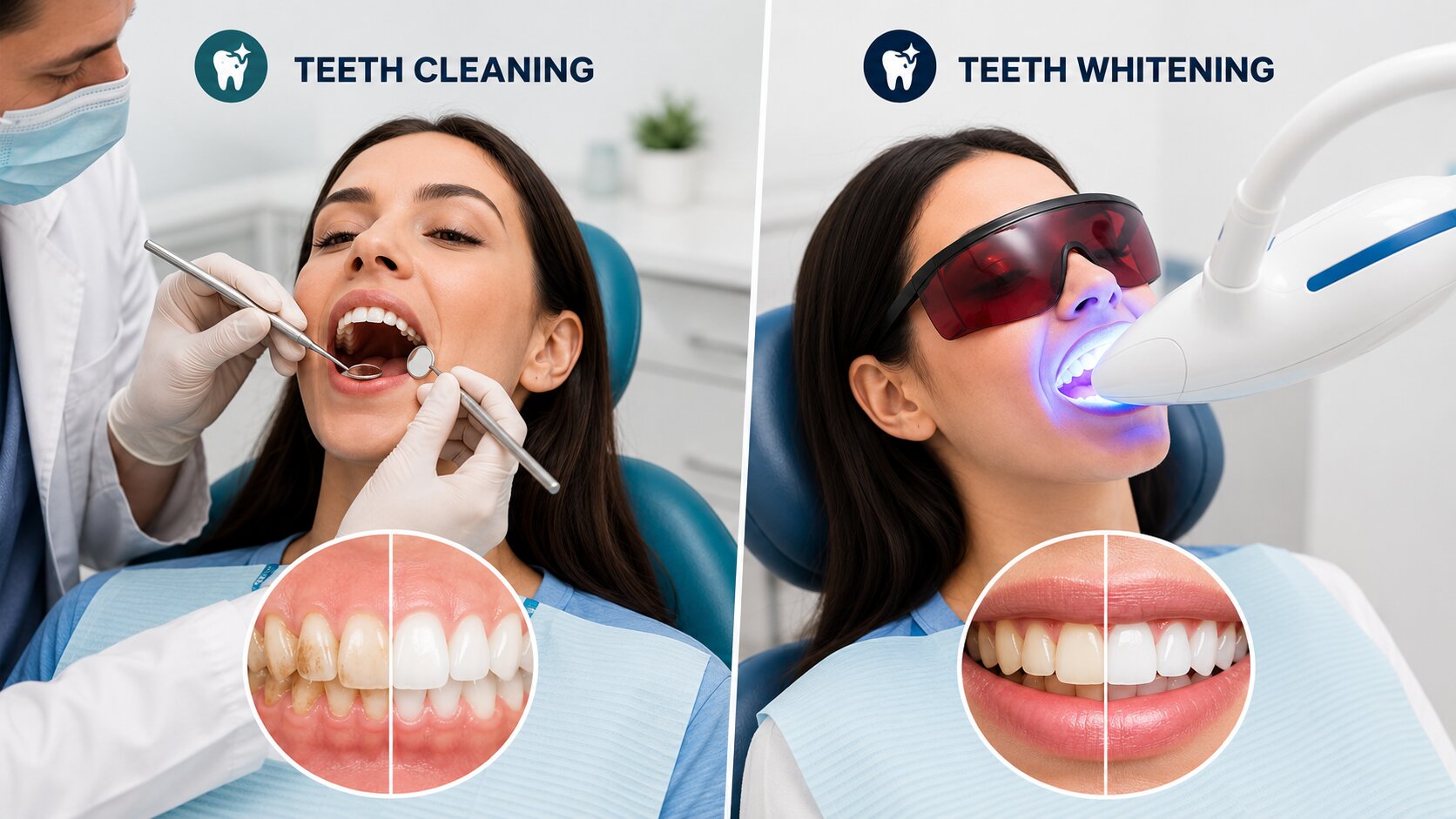
What’s the Difference Between Teeth Cleaning and Teeth Whitening?
A healthy smile is about more than looking good. It also reflects good oral health and proper dental care.
One question many people ask when visiting a Dentist in Delhi is whether they need teeth cleaning or teeth whitening.
While these treatments may seem similar, they have different purposes and offer different benefits.
At Dentem Clinic, patients often ask which treatment is right for them.
The answer depends on the condition of your teeth, your oral health, and your smile goals.
Understanding the difference can help you make the right decision for a healthier and brighter smile.
Understanding Teeth Cleaning
Teeth Cleaning in Delhi is a preventive dental treatment that removes plaque, tartar, and stains from the surface of your teeth.
Even if you brush and floss every day, small deposits can build up in areas that are difficult to clean at home.
Professional teeth cleaning is recommended every six months for most people.
It helps prevent cavities, gum disease, and bad breath while keeping your teeth and gums healthy.
During a professional cleaning, your dentist carefully removes hardened plaque, polishes the teeth, and checks for early signs of dental problems.
The treatment is comfortable, safe, and suitable for both adults and children.
What Is Teeth Whitening?
Teeth Whitening in Delhi is a cosmetic dental treatment designed to make your teeth appear brighter by reducing stains and discoloration.
Unlike teeth cleaning, whitening changes the shade of your teeth using safe whitening products applied under professional supervision.
Over time, teeth may become yellow due to aging, tea, coffee, smoking, certain medications, or poor oral hygiene.
Teeth whitening helps restore a brighter smile by removing deep stains that regular cleaning cannot eliminate.
At Dentem Clinic, professional whitening treatments are customized according to your dental condition to achieve natural-looking results while protecting your enamel.
The Main Difference Between Teeth Cleaning and Teeth Whitening
Although both treatments improve the appearance of your smile, they serve different purposes.
- Teeth cleaning keeps your mouth healthy by removing plaque, tartar, bacteria, and surface stains.
- Teeth whitening improves the appearance of healthy teeth by making them several shades brighter.
Many patients benefit from having a professional cleaning before whitening because clean teeth respond better to whitening treatment.
Read More:- Dentist in Delhi
Why Professional Teeth Cleaning Is Important
Skipping regular dental cleanings can allow plaque to harden into tartar. Once tartar forms, it cannot be removed with brushing alone.
- Reduces the risk of cavities
- Helps prevent gum disease
- Removes plaque and tartar
- Freshens breath
- Removes light surface stains
- Keeps gums healthy
- Helps detect dental problems early
- Supports overall health
Benefits of Professional Teeth Whitening
- Brighter, more confident smile
- Even whitening results
- Safe treatment under dental supervision
- Customized whitening based on your teeth
- Quick improvement, often in a single visit
- Better results than home whitening kits
At Dentem Clinic, every whitening treatment begins with a dental examination to ensure your teeth and gums are healthy enough for the procedure.
Frequently Asked Questions
1. What is the difference between teeth cleaning and teeth whitening?
Teeth cleaning removes plaque, tartar, and bacteria to improve oral health, while teeth whitening lightens the color of your teeth to improve their appearance.
2. Should I get teeth cleaning before teeth whitening?
Yes. Most dentists recommend professional cleaning first because it removes plaque and tartar, allowing whitening to work more effectively and evenly.
3. How often should I get professional teeth cleaning?
Most people should have their teeth professionally cleaned every six months.
4. Is professional teeth whitening safe?
Yes. Professional whitening performed by a qualified dentist is safe for healthy teeth and gums.
5. How long does teeth whitening last?
Results vary depending on your lifestyle and oral hygiene, but they can last from several months to a few years with proper care.