









Why Are Dental Implants Becoming Popular for Missing Teeth?
Losing a tooth can affect much more than your smile. A missing tooth may make chewing difficult, change the way you speak, or affect your confidence when smiling. Fortunately, modern dentistry offers several ways to replace missing teeth, and dental implants have become one of the most preferred options.
But why are dental implants becoming so popular?
Dental implants are designed to replace a missing tooth and its root, providing a stable foundation for a dental crown, bridge, or other restoration. They can offer a natural-looking appearance and help restore everyday oral function.
For people considering Dental implants in Delhi, understanding how implants work, their benefits, candidacy, and what the treatment involves can help them make a more informed decision.
What Are Dental Implants?
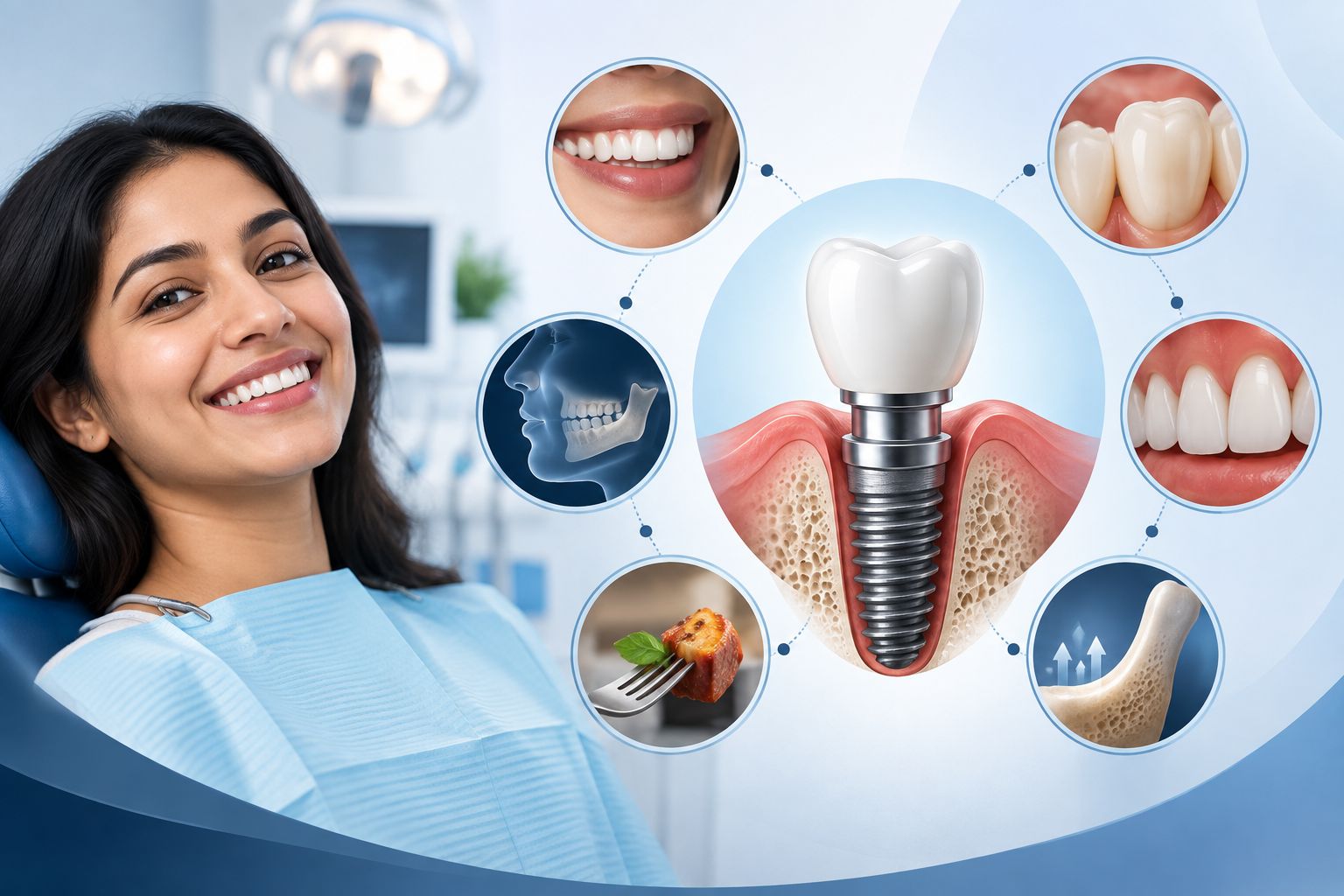
A dental implant is a small post, commonly made from titanium or another biocompatible material, that is placed into the jawbone to act as an artificial tooth root.
After the implant integrates with the surrounding bone, a connector called an abutment is attached. A customized dental crown is then placed over it to recreate the visible part of the tooth.
In simple terms, dental implant treatment generally involves three components:
- Implant: Acts as the artificial tooth root.
- Abutment: Connects the implant to the replacement tooth.
- Dental crown: Replaces the visible portion of the missing tooth.
This structure is one of the reasons implants differ from conventional removable dentures and many other tooth-replacement options.
Why Are Dental Implants Becoming Popular for Missing Teeth?
Several factors have contributed to the growing popularity of dental implants. Their stability, appearance, functionality, and long-term potential make them an attractive option for many patients.
1. They Look More Like Natural Teeth
One of the biggest advantages of dental implants is their appearance.
A dental crown can be customized according to the patient’s surrounding teeth, including its shape, size, and shade. Once treatment is completed, the replacement tooth can blend naturally with the rest of the smile.
For patients concerned about the appearance of a missing tooth, this can be an important consideration.
2. They Provide a Stable Tooth Replacement
Unlike removable dentures, dental implants are anchored into the jawbone. This provides stability when eating and speaking.
Patients do not have to remove an implant-supported tooth in the same way they would remove conventional dentures. This stability can make everyday activities feel more comfortable and natural.
3. They Can Restore Chewing Function
A missing tooth can make it harder to chew certain foods comfortably. Depending on the location and number of missing teeth, patients may also begin relying more heavily on their remaining teeth.
Dental implants can help restore a stable biting and chewing surface when appropriately planned and restored.
4. They Help Replace the Missing Tooth Root
A major difference between implants and many other tooth-replacement options is that an implant is placed in the jawbone and functions as an artificial root.
When a tooth is lost, the bone around that area may gradually change because it no longer receives the same stimulation from the natural tooth root.
Because implants are placed within the jawbone, they can provide support to the area and help preserve the structure of the jaw as part of a properly planned treatment.
5. They Can Be Used for Different Types of Tooth Loss
Dental implants are not limited to replacing just one missing tooth. Depending on the patient’s oral health and treatment plan, implants may be used for:
- A single missing tooth
- Multiple missing teeth
- Implant-supported bridges
- Implant-supported dentures
- Full-arch tooth replacement
The appropriate approach depends on factors such as the number of missing teeth, bone condition, gum health, overall health, and the patient’s treatment goals.
6. They Can Improve Confidence
A missing tooth can affect how confidently someone smiles, speaks, or interacts with others.
A well-designed implant restoration can provide a natural-looking replacement that allows many patients to feel more comfortable showing their smile again.
While appearance is not the only reason to consider implants, improved confidence can be an important part of the overall patient experience.
Are Dental Implants Better Than Dentures or Bridges?
There is not one tooth-replacement solution that is best for every patient. Dental implants, bridges, and dentures each have different advantages and limitations.
| Feature | Dental Implants | Dentures | Dental Bridges |
|---|---|---|---|
| Removable | Usually no | Yes | No |
| Replaces tooth root | Yes | No | No |
| Stability | Generally high | Can move depending on fit | Generally stable |
| Requires surgery | Yes | Usually no | Usually no |
| Can replace one tooth | Yes | Possible depending on design | Yes |
| Long-term maintenance | Requires regular care | Requires regular care | Requires regular care |
The right option should be determined after a dental examination rather than based solely on online comparisons.
Who Can Get Dental Implants?
Many adults with missing teeth may be candidates for dental implants. However, candidacy needs to be assessed individually.
A dentist may evaluate:
- Jawbone volume and quality
- Gum health
- Oral hygiene
- Number and location of missing teeth
- Existing dental conditions
- Overall health
- Smoking or tobacco use
- Healing capacity
- Sinus or other anatomical considerations where relevant
If there is not enough bone to securely support an implant, additional procedures may sometimes be considered before or along with implant placement.
What Is the Dental Implant Procedure Like?
The exact process varies from patient to patient, but implant treatment commonly follows several stages.
Step 1: Dental Evaluation
The dentist examines the teeth, gums, bite, and jawbone. Dental imaging may be recommended to understand the anatomy and plan implant placement accurately.
Step 2: Treatment Planning
The implant position, type of restoration, number of implants, and overall treatment sequence are planned according to the patient’s needs.
Step 3: Implant Placement
The implant is surgically placed into the jawbone under appropriate anesthesia.
Step 4: Healing and Integration
The implant needs time to integrate with the surrounding bone. This process is commonly referred to as osseointegration.
Step 5: Abutment and Restoration
Once the implant has adequately healed and is ready for restoration, an abutment and customized crown or other prosthetic restoration can be placed.
The complete treatment timeline varies depending on factors such as healing, bone condition, the need for additional procedures, and the type of restoration.
Is Dental Implant Treatment Painful?
Many patients are concerned about pain before undergoing implant treatment.
The procedure is performed using appropriate local anesthesia, so patients should not experience pain during the surgical placement itself. Some soreness, swelling, or discomfort can occur after treatment as the area heals.
Your dental team can provide specific aftercare instructions and recommend appropriate pain management based on your individual situation.
How Long Do Dental Implants Last?
Dental implants are designed as a long-term tooth-replacement solution, but their longevity depends on several factors.
- Oral hygiene
- Gum health
- Regular dental check-ups
- Bite forces
- Smoking or tobacco use
- Overall health
- Quality of implant placement and restoration
- Proper maintenance
The implant itself and the crown placed over it have different considerations, so regular professional evaluation remains important even after successful treatment.
How Should You Care for Dental Implants?
Although dental implants are artificial tooth replacements, they still require proper care.
- Brush twice a day with a suitable toothbrush.
- Clean between teeth and around the implant as recommended.
- Attend regular dental check-ups.
- Follow professional cleaning recommendations.
- Avoid tobacco products.
- Report bleeding, swelling, discomfort, or looseness promptly.
- Follow all post-treatment instructions provided by your dental team.
Good oral hygiene is essential for maintaining the health of the gums and tissues surrounding an implant.
What Can Affect the Success of Dental Implants?
Dental implant treatment has a high success rate when appropriately planned and maintained, but no dental procedure is completely risk-free.
Factors that may affect outcomes include poor oral hygiene, gum disease, smoking, inadequate bone support, uncontrolled medical conditions, excessive biting forces, and failure to follow post-treatment instructions.
This is why a thorough dental evaluation before implant treatment is important.
Why Choose Professional Dental Implant Care in Delhi?
Choosing the right dental professional is an important part of implant treatment.
Patients searching for Dental implants in Delhi should consider factors such as:
- Dentist’s qualifications and experience
- Proper diagnosis and treatment planning
- Appropriate dental imaging
- Sterilization and infection-control practices
- Quality of implant systems and materials
- Customized treatment planning
- Clear explanation of risks, benefits, costs, and alternatives
- Follow-up and maintenance support
At Dentem Clinic, implant treatment is approached as a complete process, from diagnosis and planning to restoration and follow-up care.
The dental team includes Dr. Tanvir Singh, BDS, MDS – Orthodontics, and Dr. Gunita Singh, BDS, MD – Dental Lasers, who focus on providing patient-centered dental care based on individual treatment needs.
When Should You Consider Dental Implants?
You may want to discuss dental implants with your dentist if you:
- Have one or more missing teeth
- Have difficulty chewing because of missing teeth
- Feel uncomfortable with removable dentures
- Want a fixed replacement for a missing tooth
- Are concerned about changes associated with long-term tooth loss
- Want to explore options for restoring your smile and oral function
However, the decision should always be made after a professional examination.
Frequently Asked Questions About Dental Implants
Are dental implants permanent?
Dental implants are intended to be a long-term tooth-replacement solution. Their longevity depends on factors such as oral hygiene, gum health, lifestyle, bite forces, and regular dental care.
Can dental implants replace one missing tooth?
Yes. A single dental implant can often be used to replace one missing tooth, usually with a customized crown attached to the implant.
Are dental implants suitable for older adults?
Age alone does not necessarily prevent someone from receiving dental implants. Overall oral health, bone condition, healing ability, and general health are more important factors.
How long does dental implant treatment take?
Treatment time varies. Some patients may require additional procedures or healing periods before the final restoration can be placed. Your dentist can provide a personalized timeline after examination and imaging.
Do dental implants require special cleaning?
Dental implants require regular oral hygiene, including brushing and cleaning between teeth and around the implant. Your dentist or hygienist can recommend the most suitable cleaning method for your specific restoration.
Are dental implants worth considering for missing teeth?
For suitable candidates, dental implants can offer a stable, natural-looking, long-term option for replacing missing teeth. However, the best choice depends on individual dental and health factors.
Final Thoughts
Dental implants are becoming increasingly popular because they offer more than a replacement for the visible part of a missing tooth. They provide a stable foundation, can restore chewing function, can produce natural-looking results, and may help maintain the jaw’s structure.
However, dental implants are not automatically the right choice for everyone. A detailed examination, appropriate imaging, and personalized treatment planning are essential before deciding on implant treatment.
If you are exploring Dental implants in Delhi, consult the dental team at Dentem Clinic to understand your treatment options and determine whether dental implants are suitable for your oral health and long-term goals.